1900
Hours of Work
Dec 2025
Completion Date
8 Months
Project Duration
2 - 6
Team Size

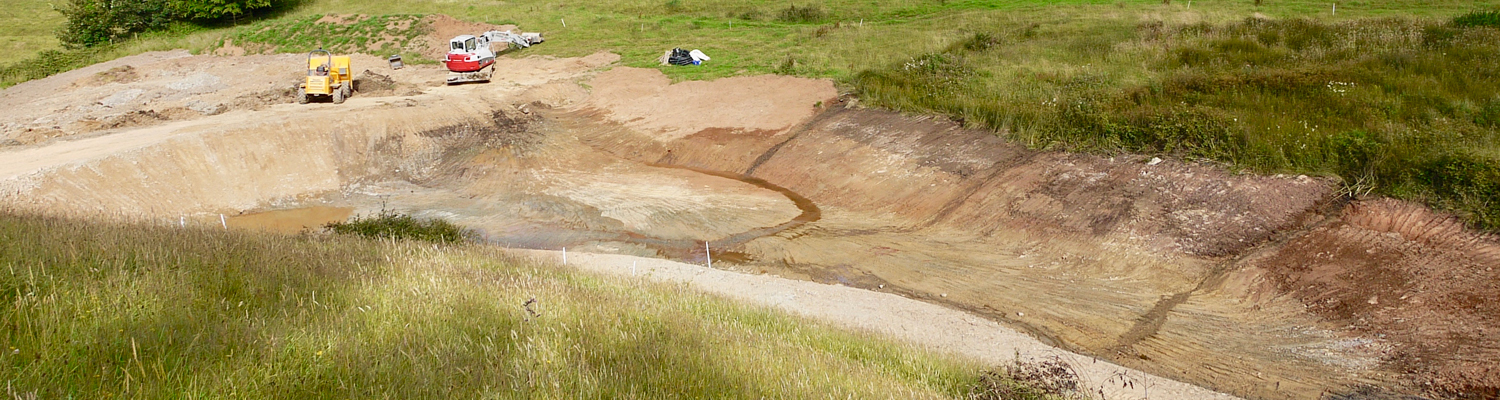
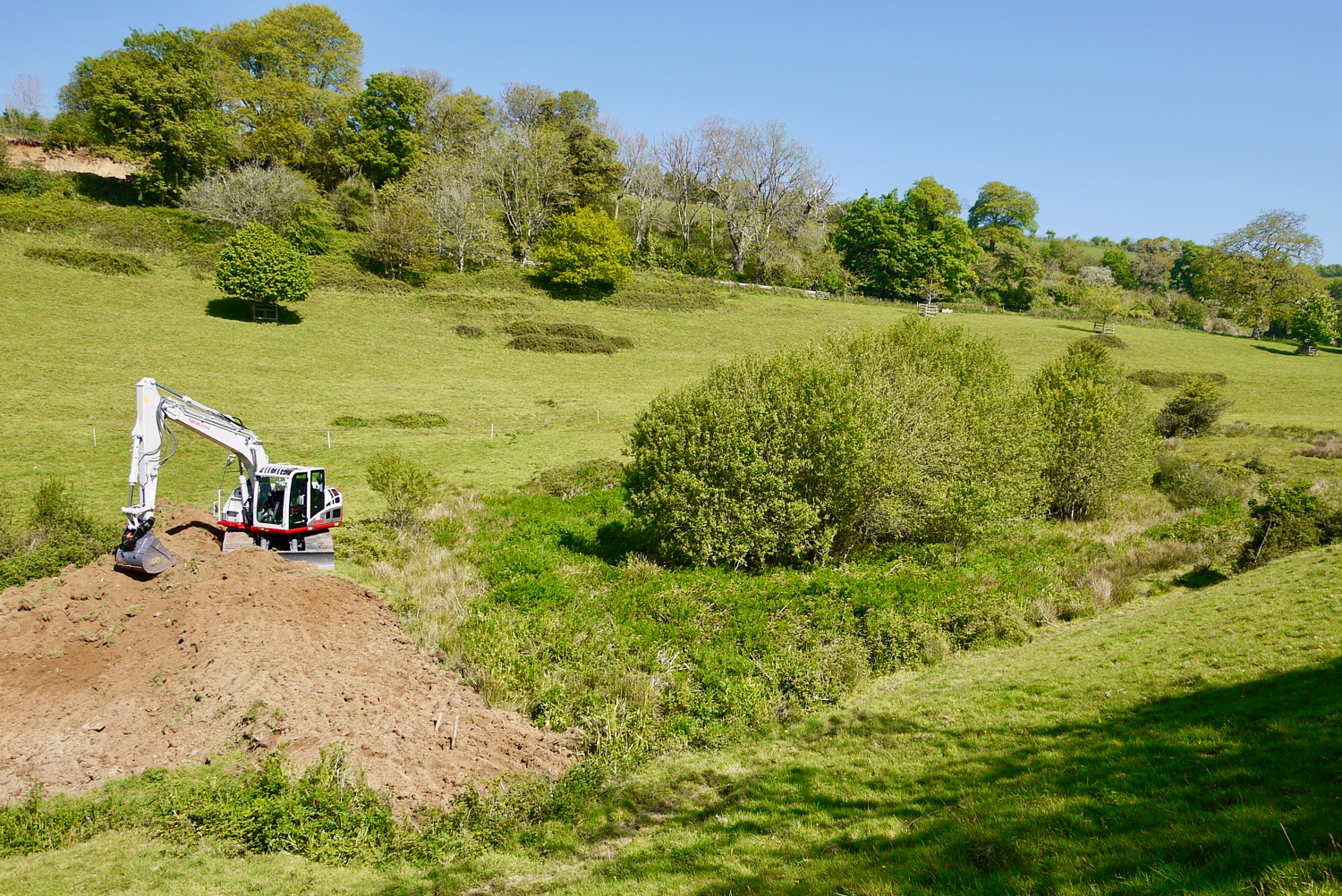
Excavation and careful removal of the precious topsoil layer is always the first step to prepare for a lake excavation project. All available topsoil is stored for the finishing stages of the project.
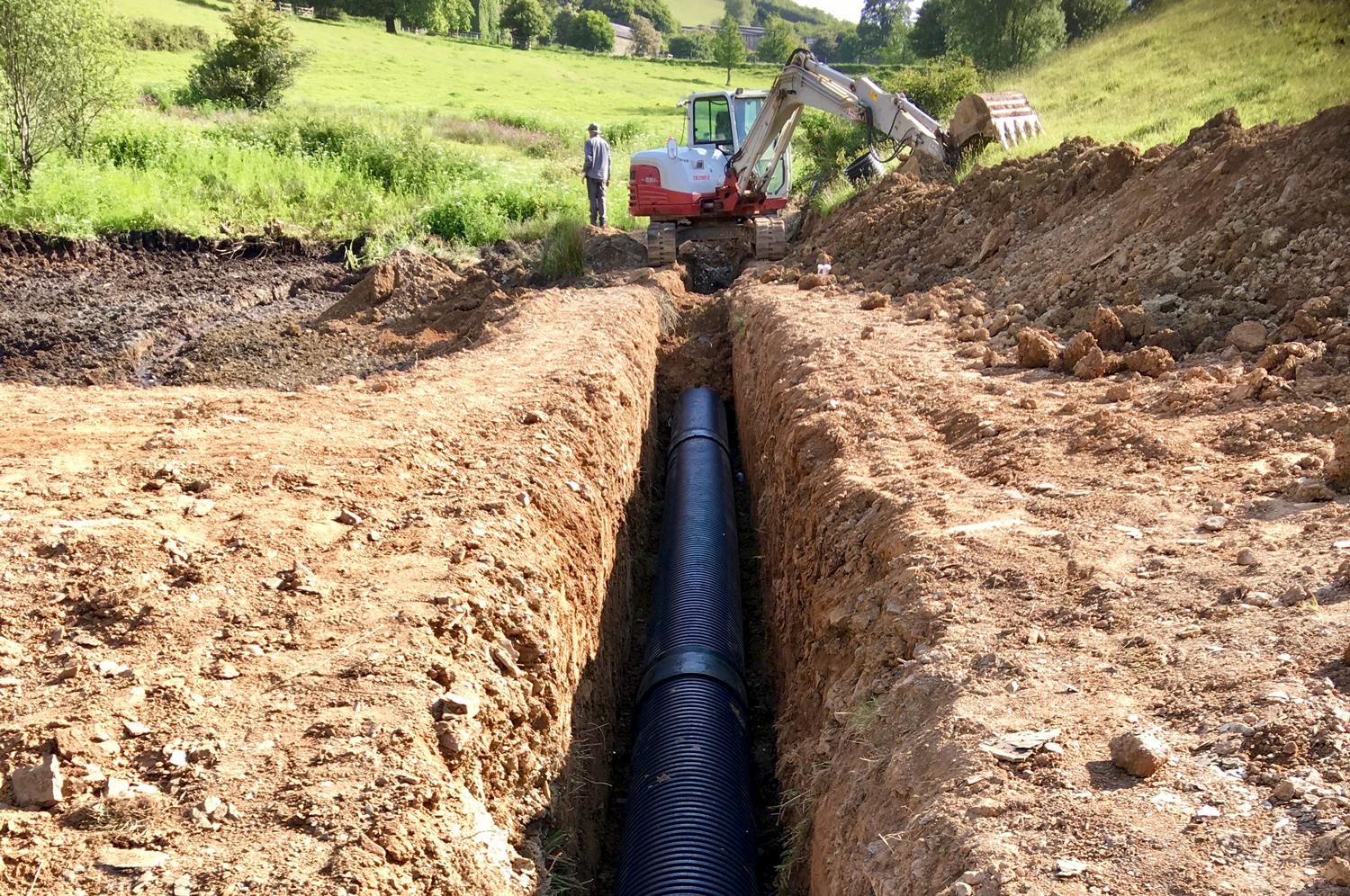
All watercourses carry silt and organic matter, including farmland run-off. This is not conducive to the high water quality, especially in natural swimming pool or lake project, so diverting the watercourse safely past the pool or lake is required to maintain consistent water quality.
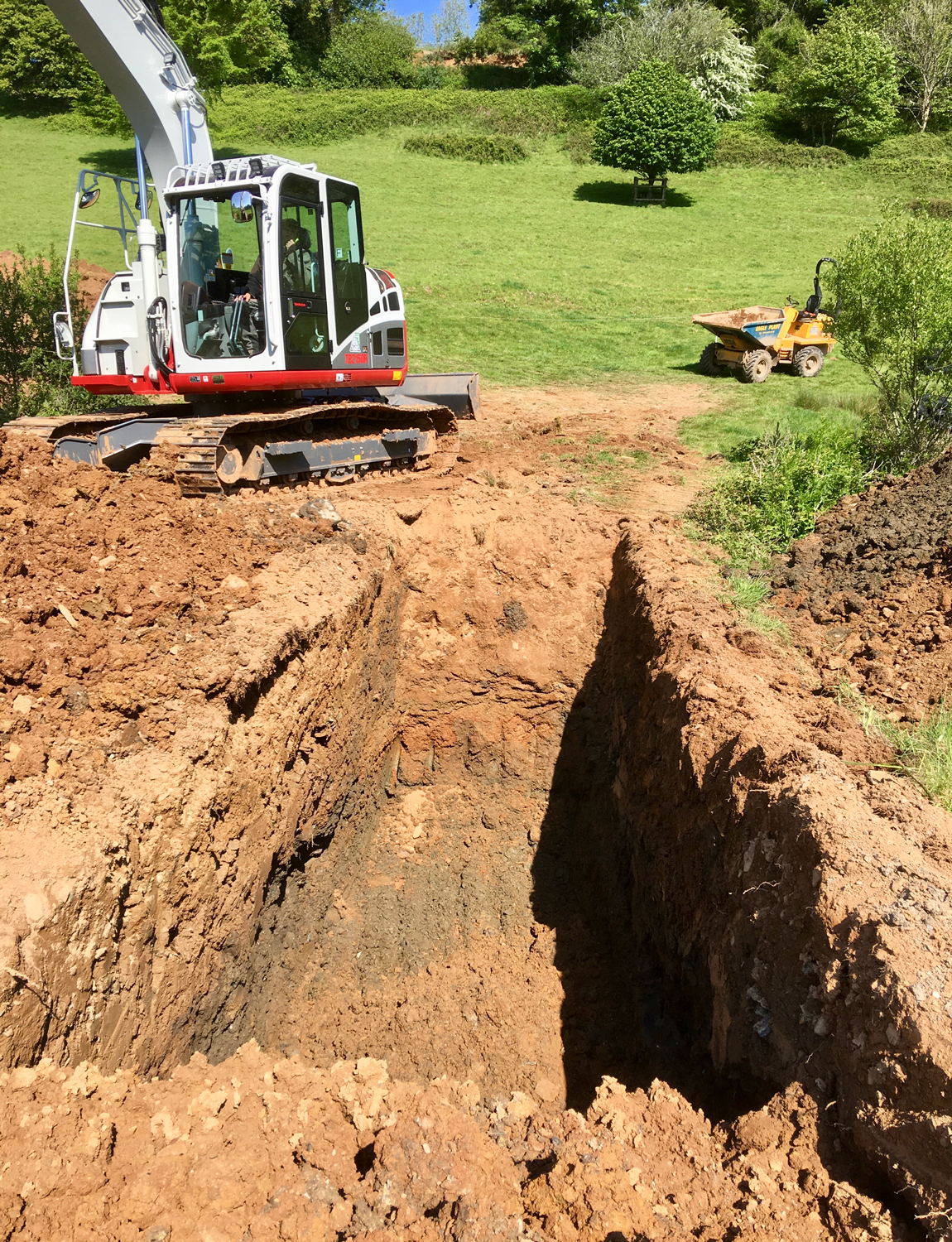
A critical step is the excavation of footings key beneath the bund if there is damming required, such as the typical shallow valley site. This ensures that no historic land drainage is left beneath the dam and removes weak sediment or gavel layers before the best clay rich material is used to construct the bund off the back-filled footing.
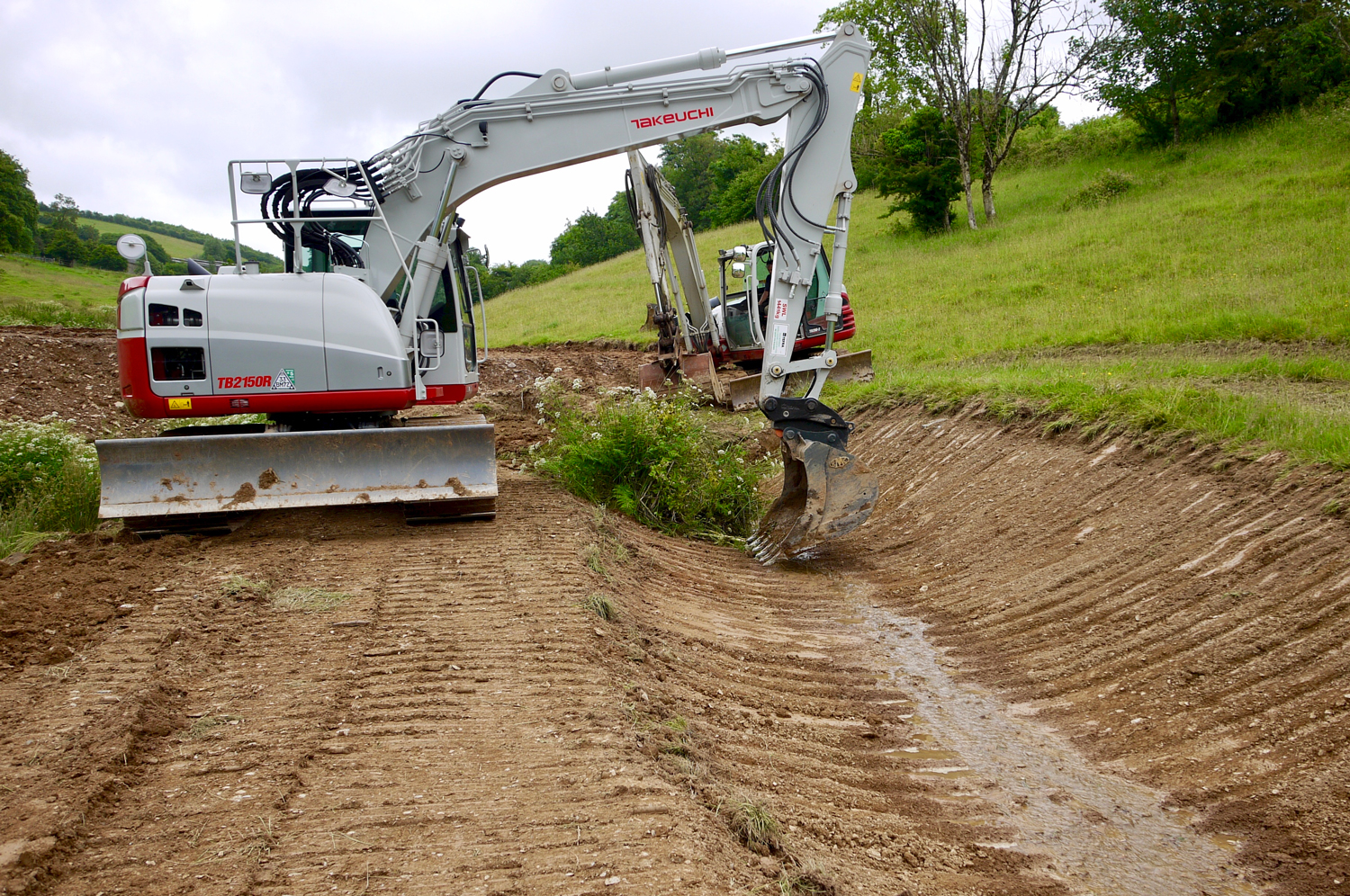
To minimize the cost of expensive pipework the stream is re-created on a slightly higher contour line just below the lake site – all the wetland habitat from the streams original location is meticulously removed and carefully reconstructed in the new stream bed. This completes preparation of the spoil area below the lake for excavation to begin.
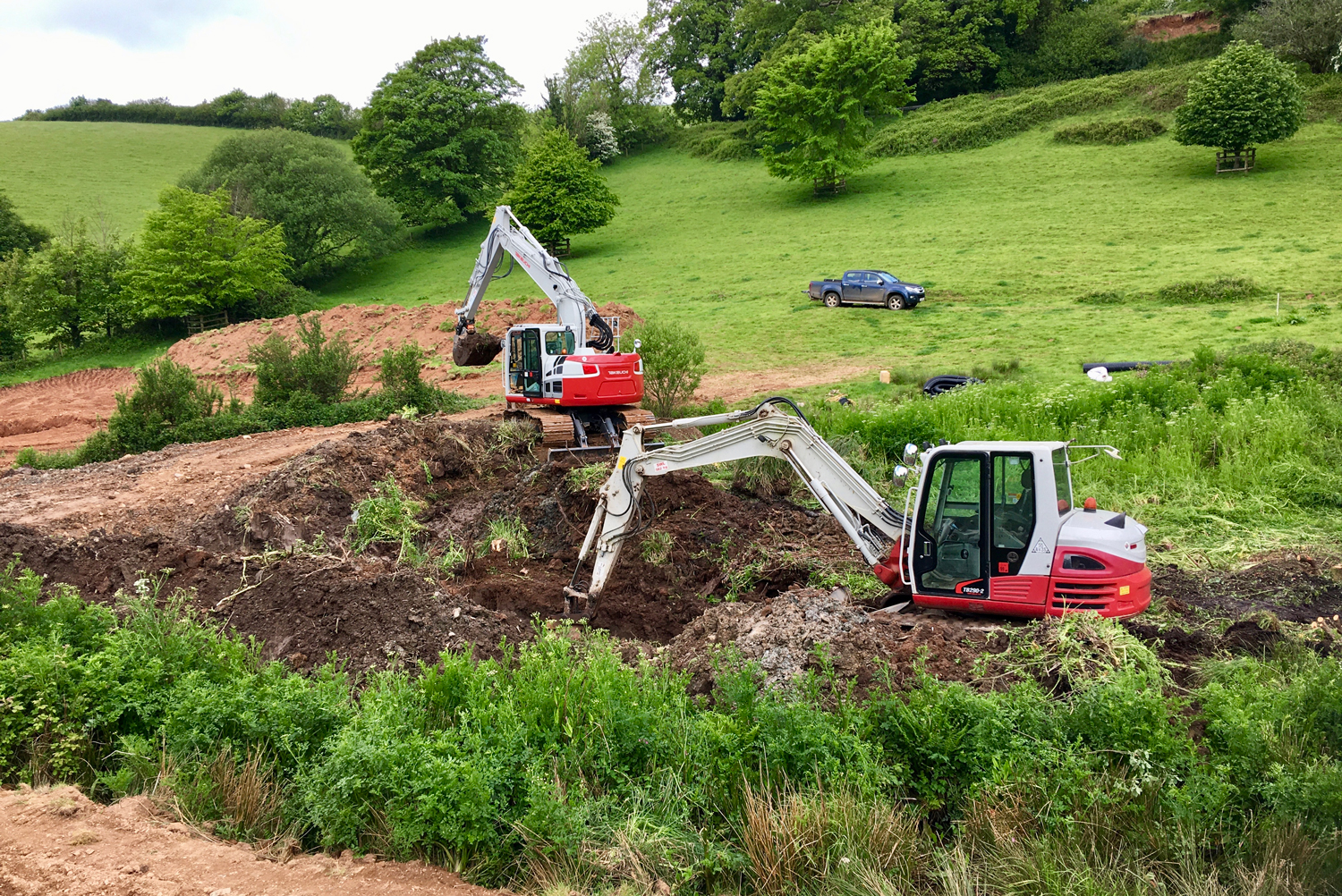
Excavation begins with removal of silt and vegetation from the historic pond site – this is moved the short distance to the fill area below the bund, whilst simultaneously excavating clay rich material to rebuild a much wider dam bund on the clay key footing built in stage 3.
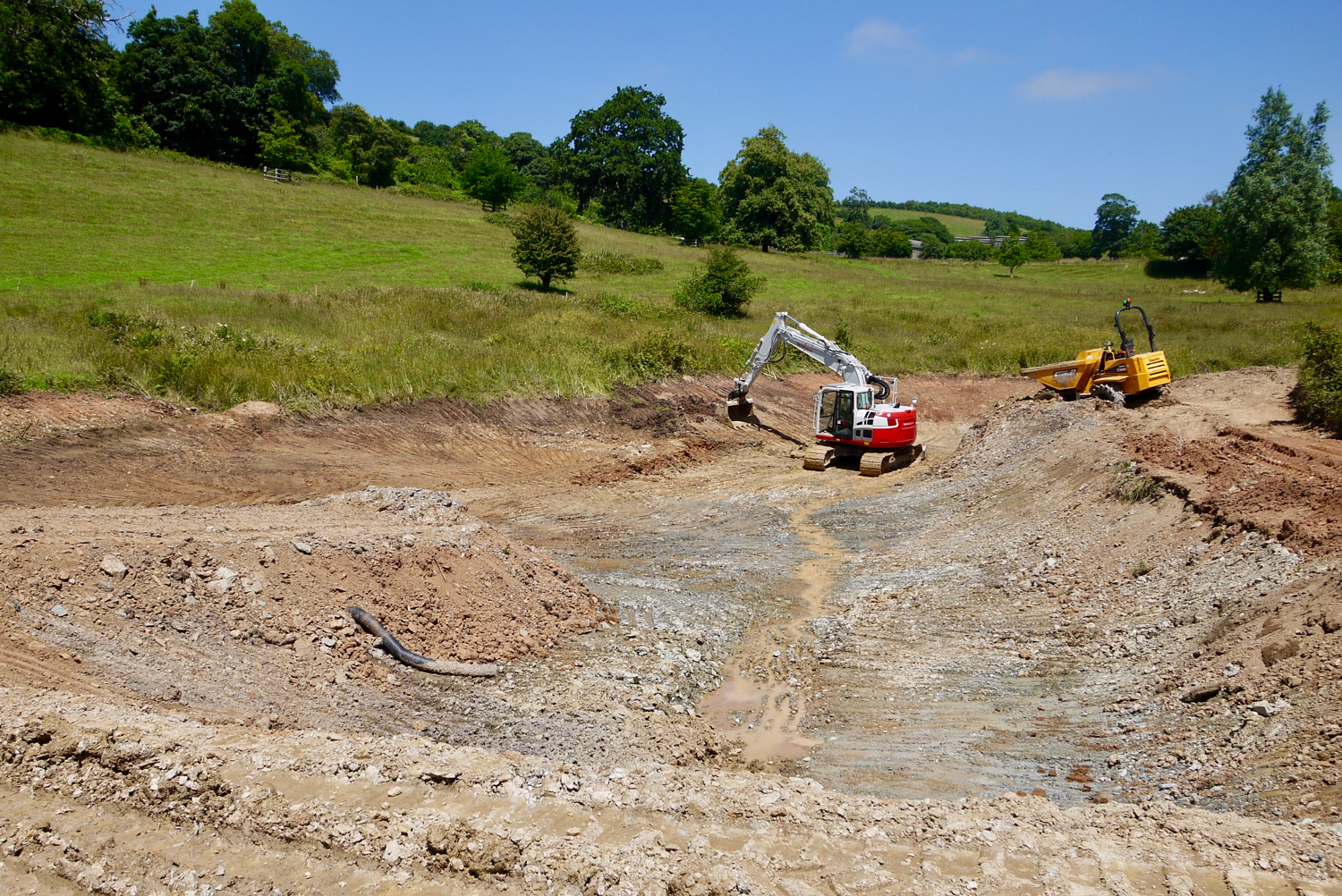
Excavation of the new larger lake – the distinctly visible causeway the in centre of the lake area allows a dumper to safely access the excavation to be within easy reach of the excavator.
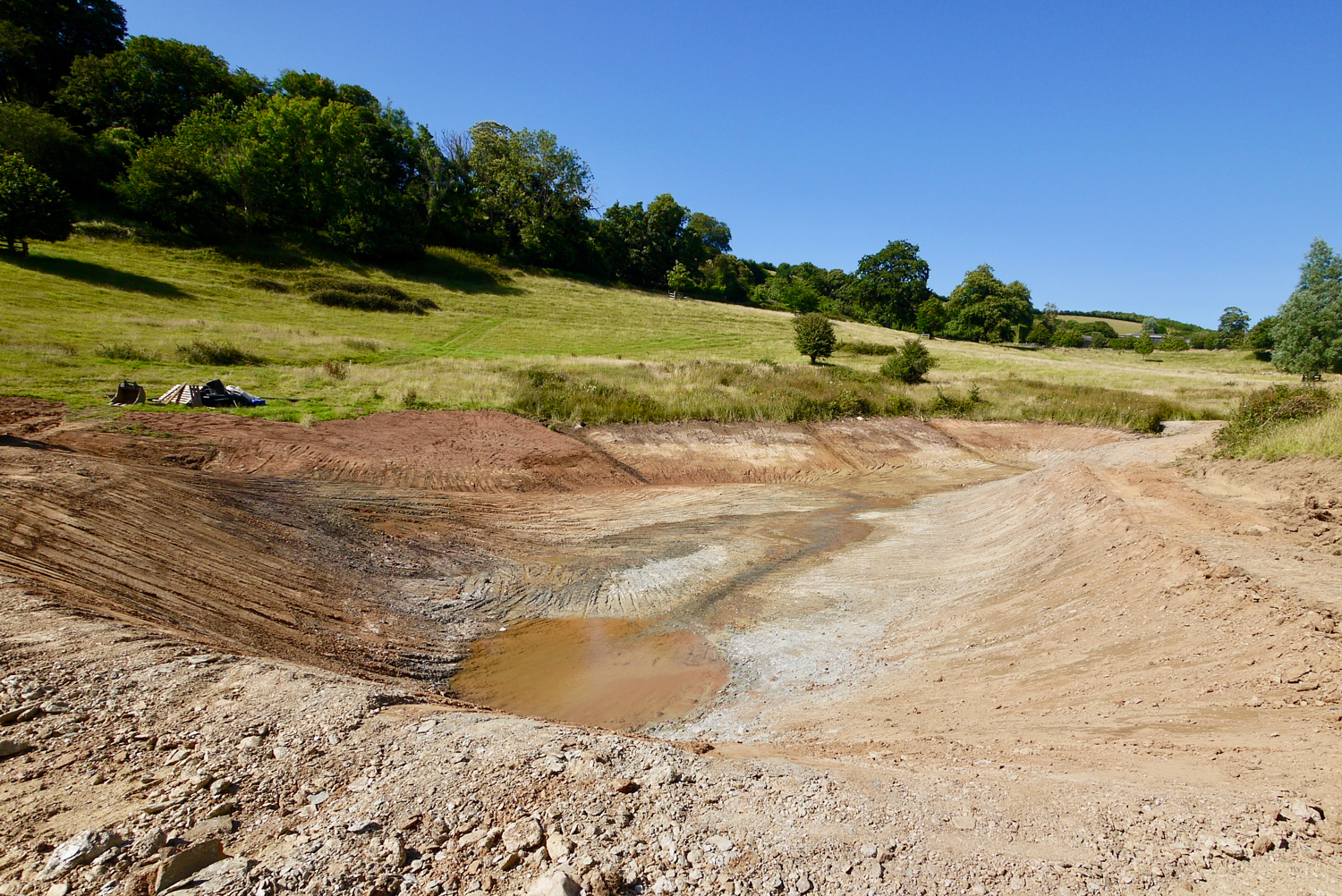
Excavation stage is complete achieving 3m maximum depth with a swimming area of 30m x 45m.
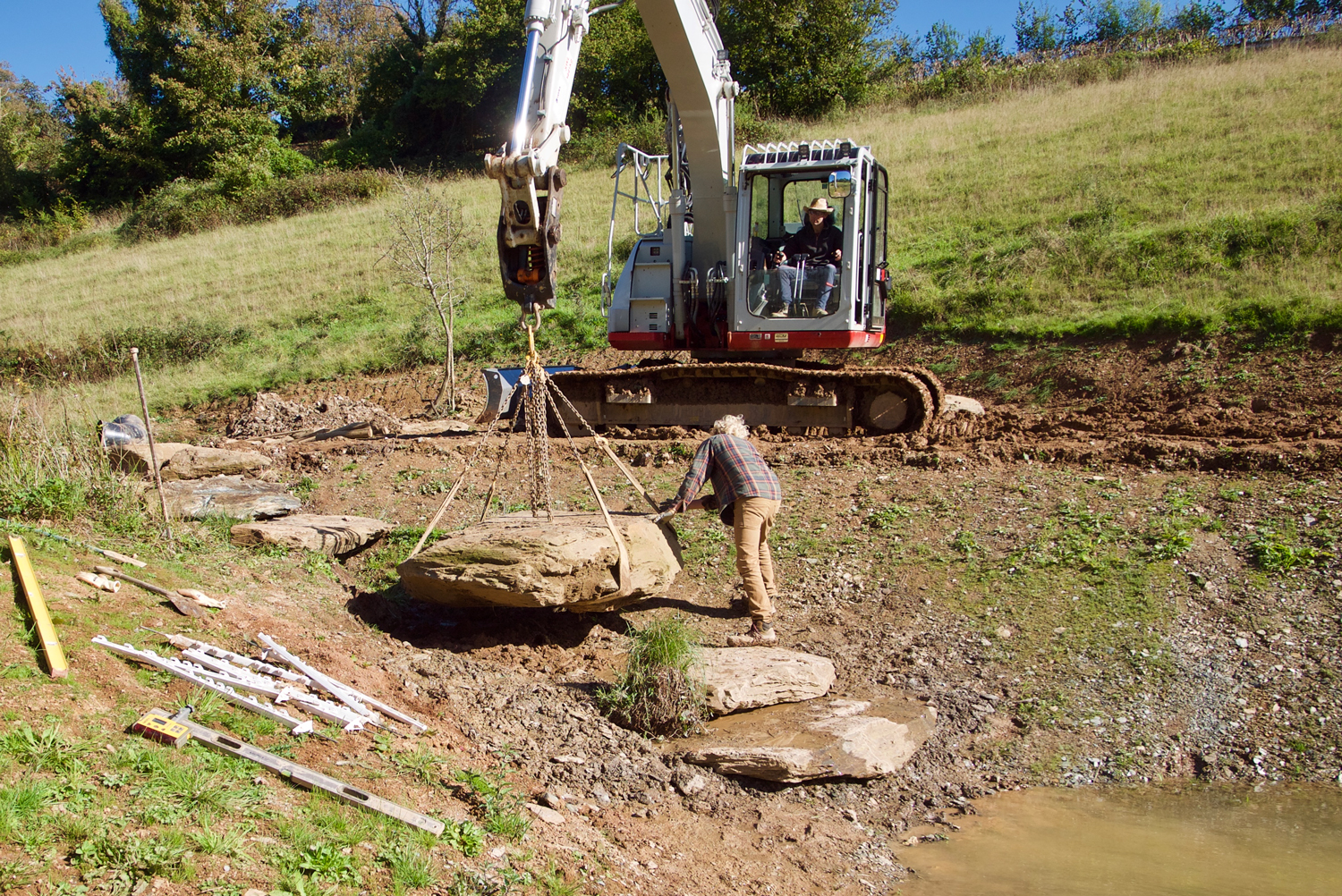
Installing 1-3 tonne feature boulders to re-create the original stream bed just below the diversion pipe. These boulders will also provide secondary access/exit boulder steps into the water.
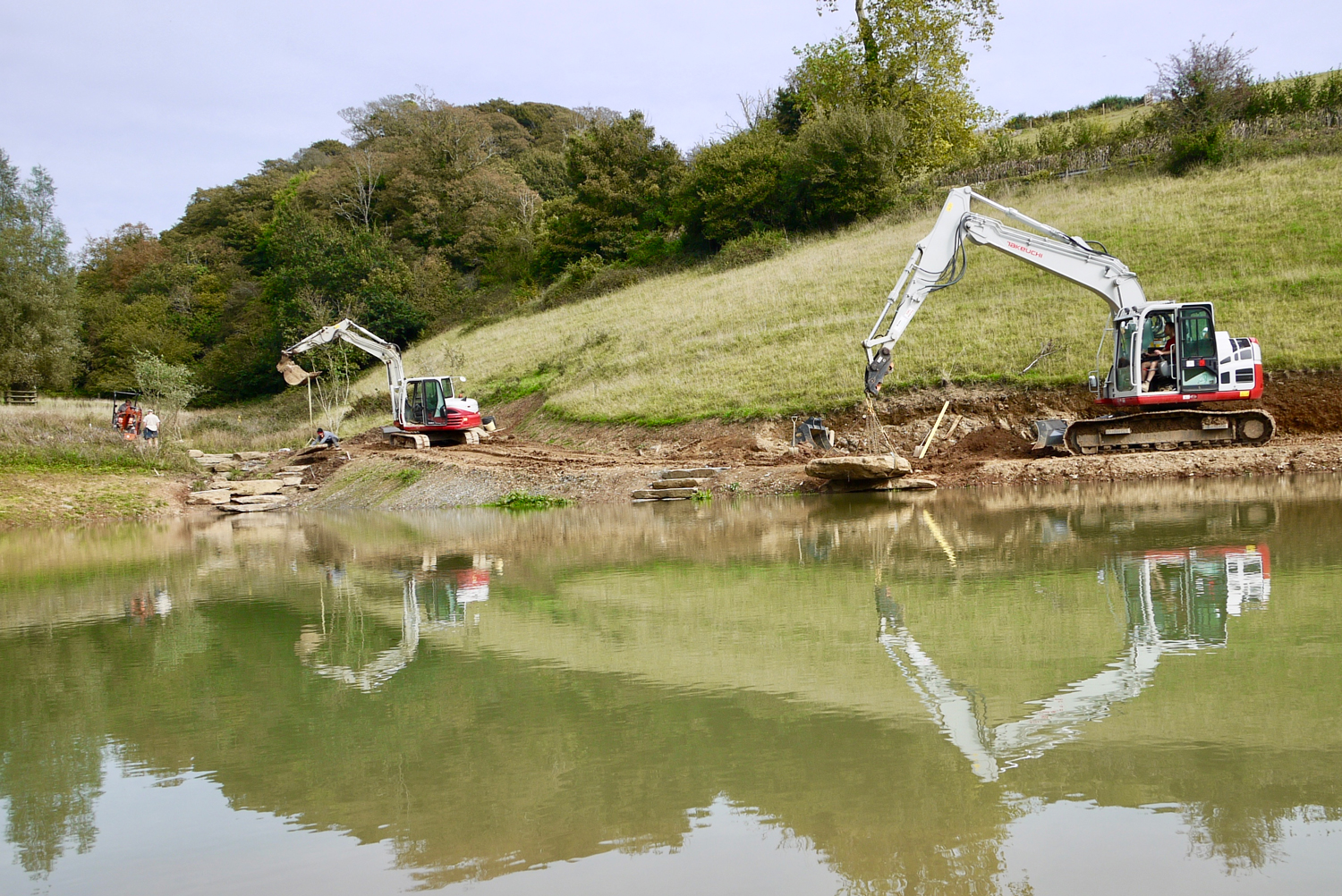
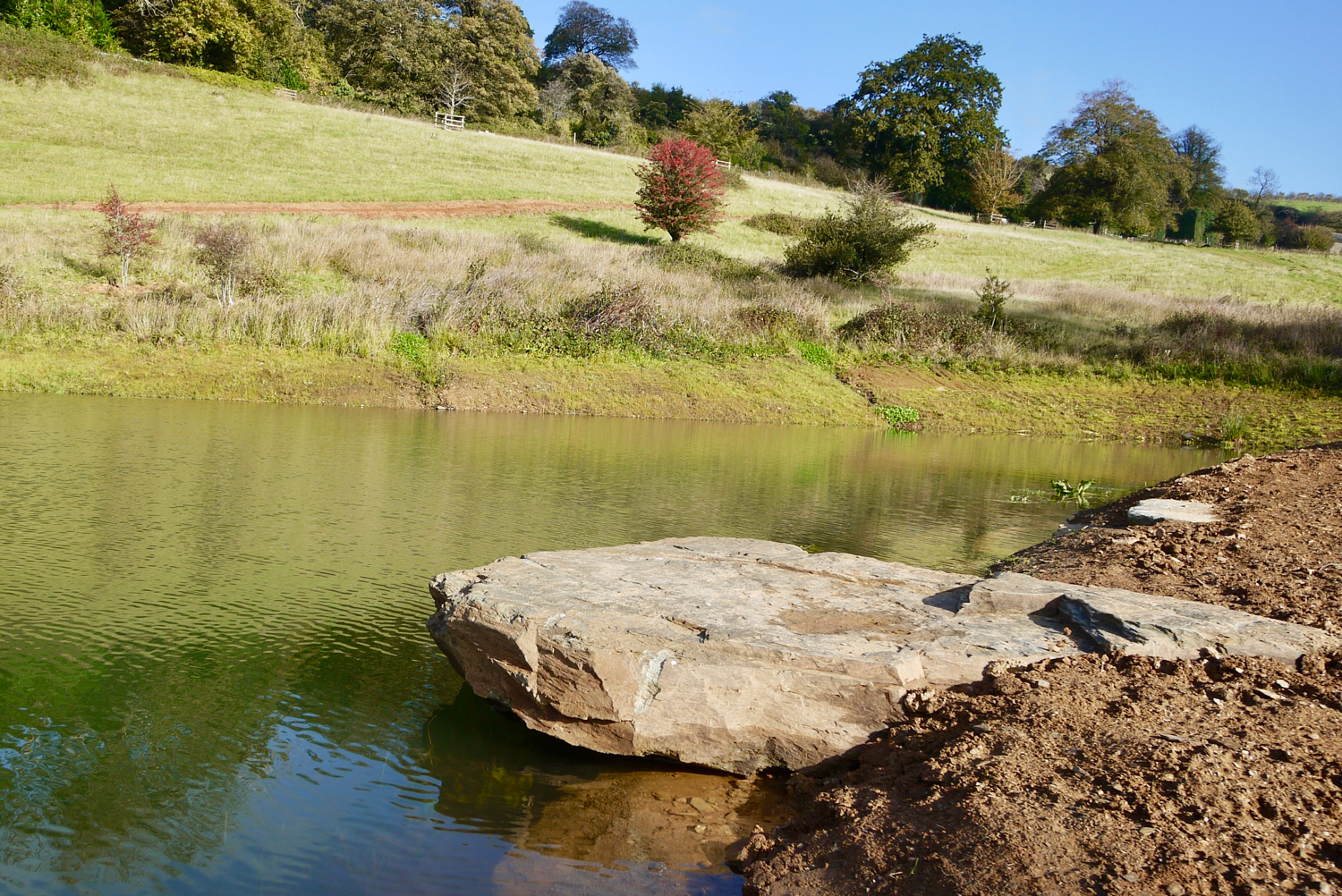
Installing a 3 tonne diving boulder stone found in an historic quarry just 200m from the lake site. Supported on a wide plinth stone allowing the diving stone to overhang the bank with water level sitting just onto the bottom of the stone.
Installing 1-3 tonne feature boulders to re-create the original stream bed just below the diversion pipe. These boulders will also provide secondary access/exit boulder steps into the water.
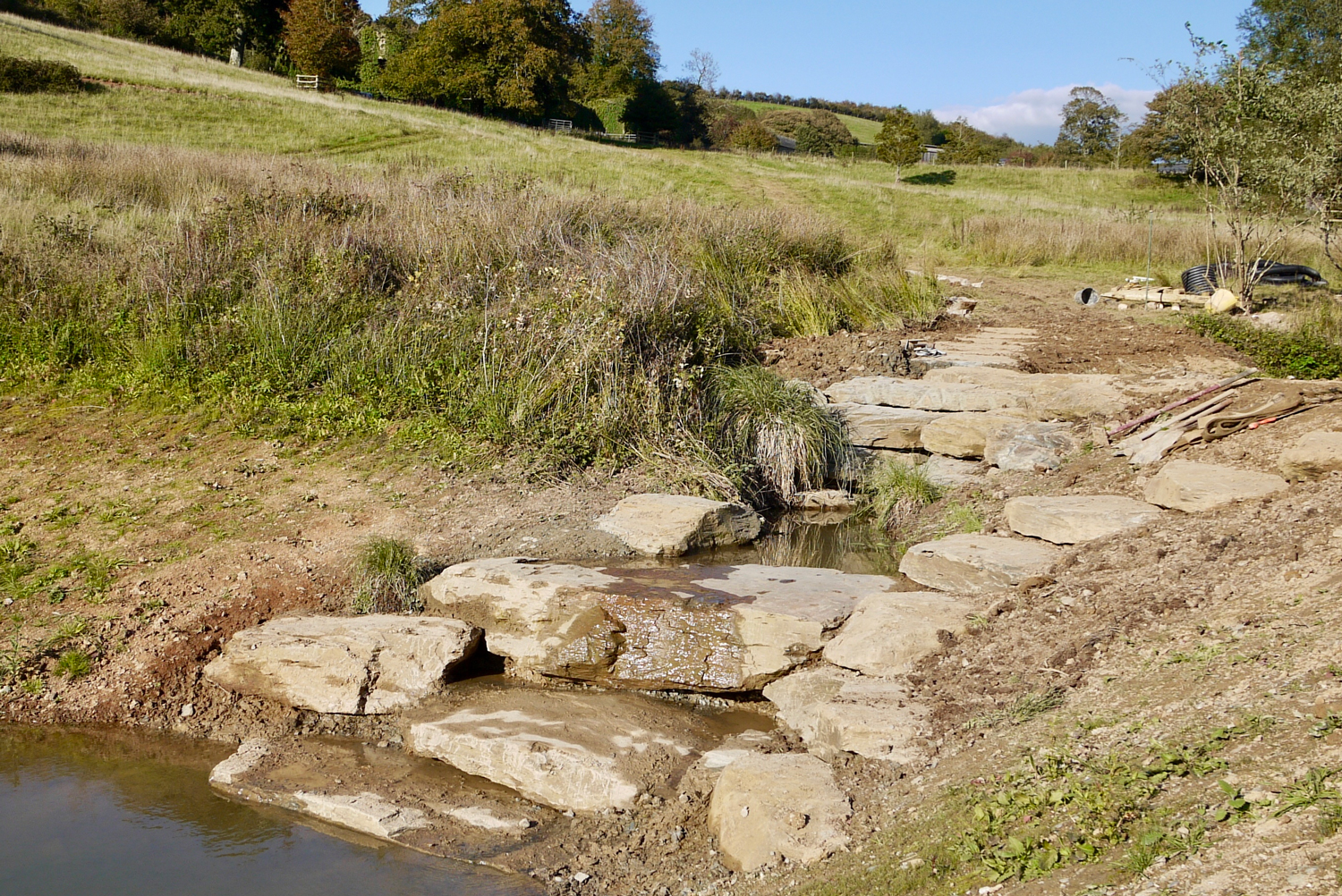
The completed recreated stream boulder stonework with boulder steps accessing the water from right. Though the original stream is diverted by the the pipework installed in the earlier stages of work the newly recreated steam will carry a small flow of spring water from one of the many natural springs feeding the lake.
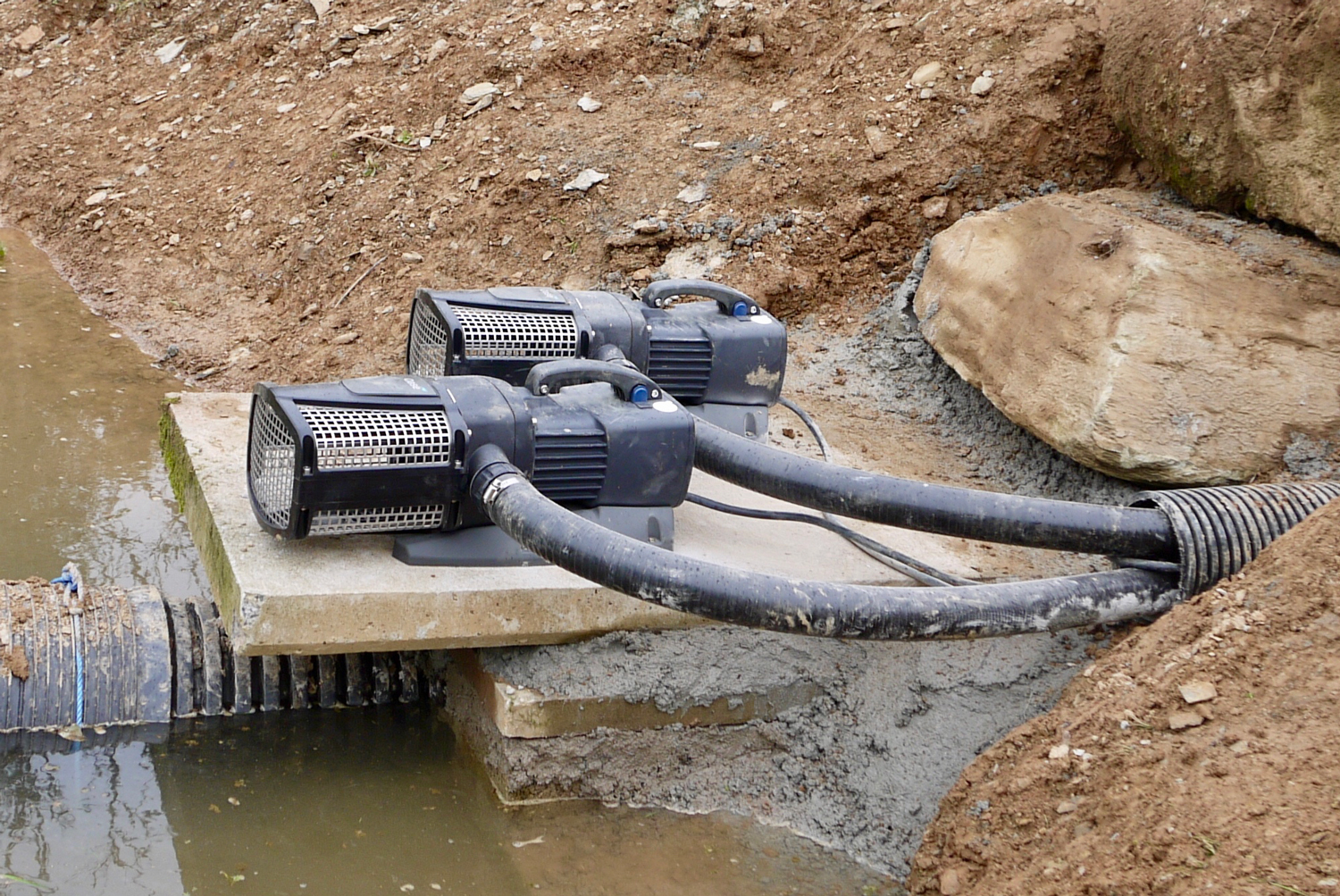
The lake water will be pumped from 2 Oase Eco Expert 27,000 12v pumps mounted onto a reinforced precast concrete platform to a specialized filtration system up on the bank. This will EV treat the water to remove harmful bacteria and green algae and filter out suspended organic matter and sediment, filtering over 50,000 litres of water an hour to provide high quality safe bathing water. The mounting platform will keep the pond pumps away from silt buildup on the lake bed and allow for easy maintenance.
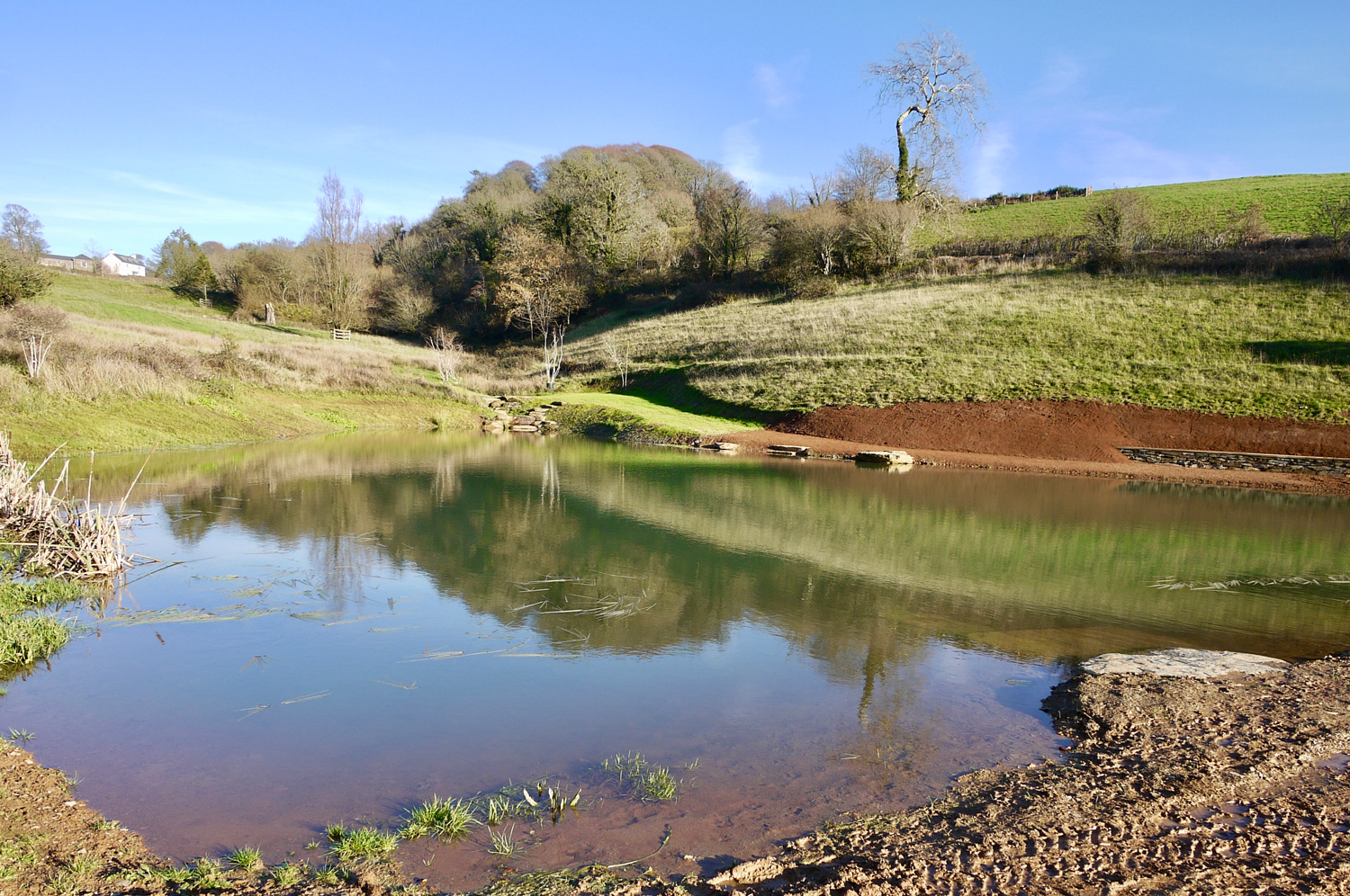
The natural swimming lake is completed late in the year. Harnessing the abundant high quality natural springs around and even within the lake bed, in combination with a water filtration system and also diverting the stream to prevent potentially contaminated water from entering the lake, we created a custom designed swimming lake with outstanding water for people and nature to enjoy.
